

What If Your Website Ranks on Google but AI Search Engine Optimization Still Isn’t Enough for AI Visibility?
You spend months improving your website, optimizing pages, publishing content, and building authority. Eventually, your pages start appearing in Google search results. Traffic increases, rankings improve, and everything seems to be moving in the right direction.
Then you ask ChatGPT, Gemini, or another AI assistant a question related to your industry and notice something surprising your website is nowhere to be found.
This is a challenge many website owners are beginning to face. While Google and AI systems both help users find information, they do not evaluate websites in the same way. A page that performs well in search results may not always become a trusted source for AI-generated answers.
Understanding this difference is becoming one of the most important skills for website owners, bloggers, marketers, and businesses that want long-term online visibility.
1. Google Looks for the Best Page, AI Looks for the Best Answer
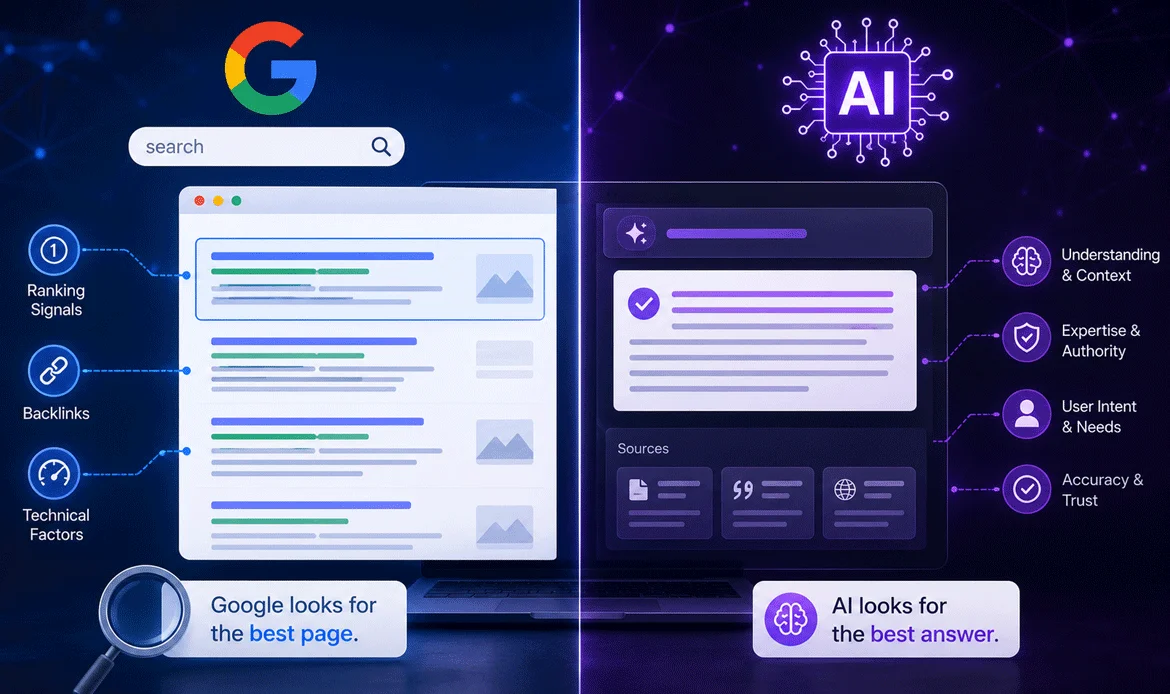
Google’s primary goal is to find the most relevant webpage for a search query. It evaluates signals such as backlinks, keyword relevance, page speed, user experience, and website authority. While these factors remain essential for visibility, modern websites must also consider AI Search Engine Optimization as AI-powered platforms increasingly analyze content based on context, expertise, and usefulness rather than traditional ranking signals alone.
AI systems take a different route. Instead of displaying a list of links, they attempt to generate direct answers. To do this effectively, they need to understand the meaning behind the content rather than simply identifying matching keywords.
In simple terms:
- Google finds pages.
- AI understands information.
- Google ranks websites.
- AI selects knowledge.
This distinction is shaping the future of online visibility.
2. Why Keywords Matter Less Than Context for AI
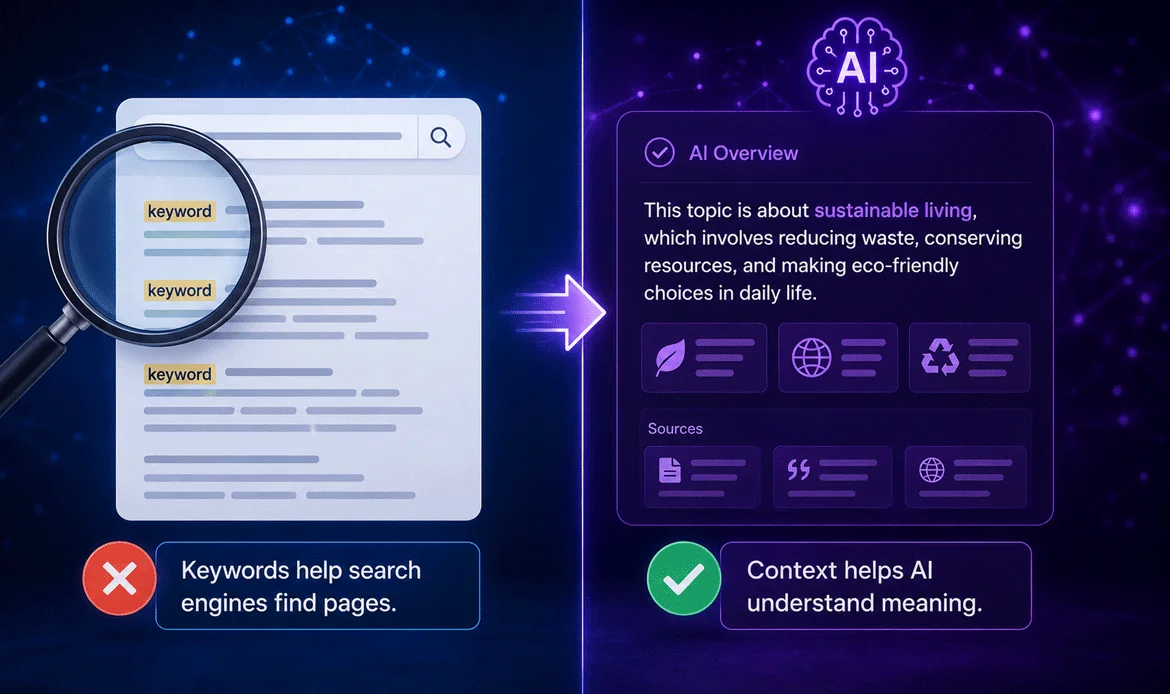
Keywords still play an important role in helping search engines understand content. However, AI systems focus more on context and topic coverage.
Imagine two articles about WordPress performance. One article repeats the target keyword several times but provides only basic advice. Another article explains performance issues, optimization methods, common mistakes, and practical solutions.
The second article is more likely to be referenced by AI because it offers a complete understanding of the topic.
This is why modern content strategies should focus on answering user questions thoroughly rather than simply targeting keywords.
3. Real Example: How Google and AI May See the Same Content
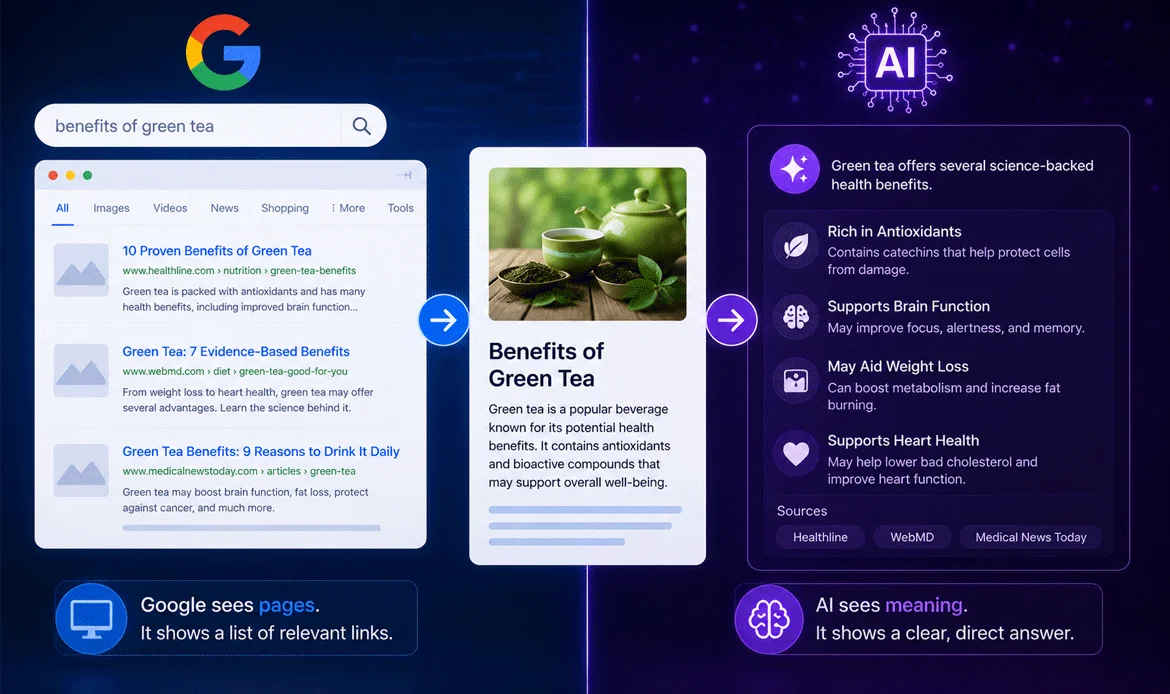
Let’s look at a practical example.
Website A publishes a 1,000-word article with good keyword optimization and strong backlinks. The content is well-structured and ranks reasonably well in search results, but it mainly covers the topic at a basic level. While it satisfies traditional SEO requirements, it may not provide enough depth, context, or practical insights for AI systems that aim to deliver comprehensive answers to users.
Website B publishes a 1,800-word article that includes:
- Detailed explanations
- Real-world examples
- Common mistakes
- FAQs
- Actionable recommendations
Google may rank either article depending on multiple ranking factors.
However, AI systems are more likely to trust Website B because it demonstrates deeper expertise and provides a more complete answer.
This is one reason why content quality has become increasingly important.
4. The Biggest Mistake Many Websites Make Today
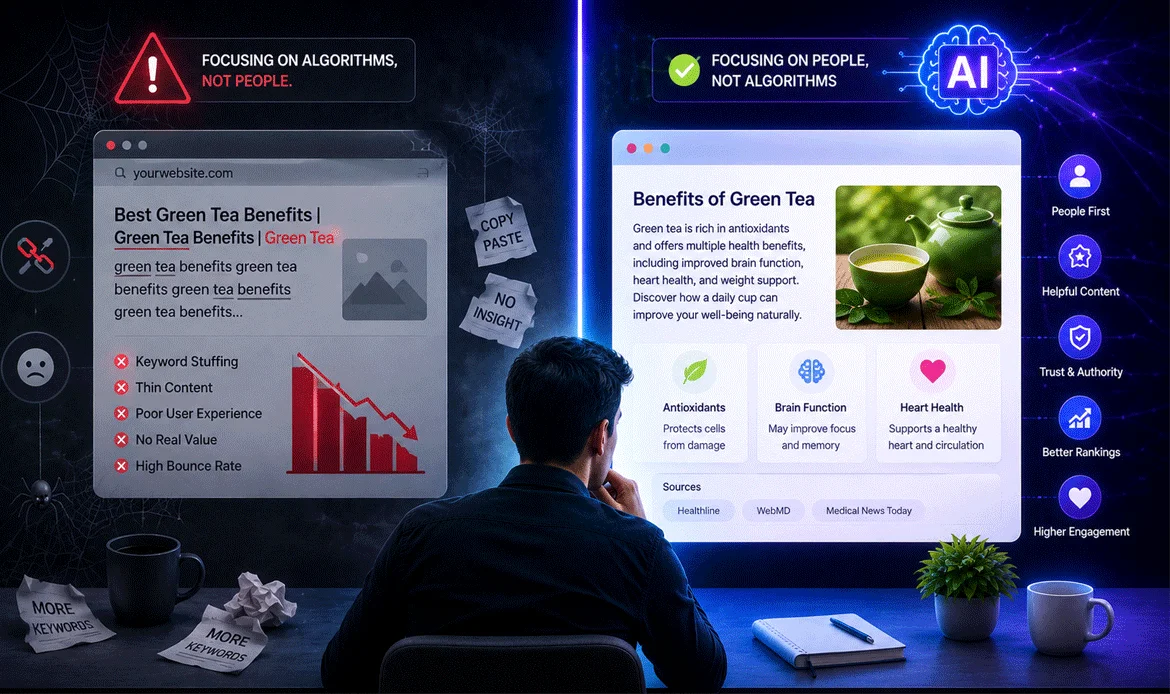
Many website owners continue creating content primarily for algorithms instead of people. While this approach may achieve short-term visibility, it often fails to deliver the depth and usefulness that modern users expect. Both AI-powered platforms and search engines are increasingly rewarding content that addresses real questions, provides practical solutions, and offers genuine value rather than simply targeting keywords for better Google Search Ranking.
Common mistakes include:
- Publishing thin articles
- Rewriting competitor content
- Overusing keywords
- Covering topics superficially
- Ignoring user intent
These tactics often produce content that looks optimized but fails to deliver real value.
Both Google and AI systems are becoming better at identifying content that lacks originality and usefulness. Websites that consistently help users solve problems tend to perform better over time because they provide genuine value rather than simply targeting rankings. This is where AI Search Engine Optimization plays an important role, as it focuses on creating content that demonstrates expertise, relevance, and trustworthiness while meeting the needs of both users and AI-powered search experiences.
5. What AI Considers a High-Quality Website
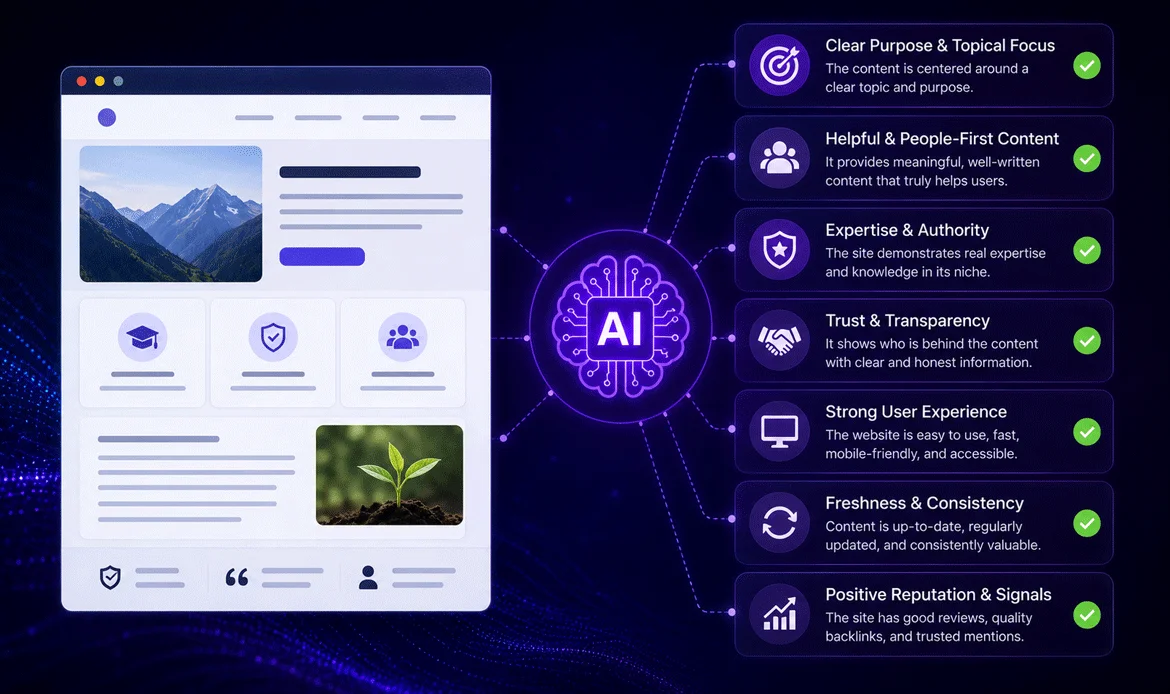
AI systems evaluate websites based on several trust and quality signals. Unlike traditional search engines that rely heavily on ranking factors, AI platforms place greater emphasis on content accuracy, expertise, relevance, and user value. Websites that consistently publish reliable information and demonstrate authority within their niche are more likely to be trusted, referenced, and recommended by AI-powered systems.
Some of the most important factors include:
- Accurate information
- Clear explanations
- Topical expertise
- Helpful examples
- Updated content
- Strong website credibility
For example, a website that regularly publishes detailed tutorials and practical solutions is more likely to be trusted than a website that produces generic content on random topics.
The more authority you build within your niche, the more valuable your content becomes.
6. What Website Owners Should Change Right Now

One of the biggest questions businesses ask is whether they need a completely new SEO strategy as search continues to evolve. With the growing influence of AI-powered search experiences, many organizations are rethinking how they create and optimize content. While traditional SEO remains important, AI Search Engine Optimization is becoming an essential addition, helping businesses improve visibility by focusing on context, expertise, user intent, and content quality rather than relying solely on conventional ranking factors.
The answer is no.
Instead, focus on improving how useful your content is.
✔ Create Content That Answers More Questions
Users rarely have only one question. They usually have follow-up questions too.
For example:
Instead of writing:
“How to Speed Up a Website”
Cover:
- Why website speed matters
- Common causes of slow websites
- Best optimization methods
- Tools to measure performance
- Mistakes to avoid
This approach increases the value of your content significantly.
✔ Add Real Examples and Experiences
Generic advice is everywhere.
What stands out are:
- Case studies
- Personal experiences
- Client success stories
- Before-and-after results
Real examples make content more trustworthy and easier for both users and AI systems to understand.
✔ Build Topic Authority
Publishing one article is no longer enough.
Instead, create related content around the same subject.
For example, if your website focuses on WordPress:
- WordPress speed optimization
- WordPress security
- WordPress SEO
- WordPress themes
- WordPress maintenance
This helps establish expertise and authority within your niche.
7. How to Improve Visibility in Both Google and AI Search
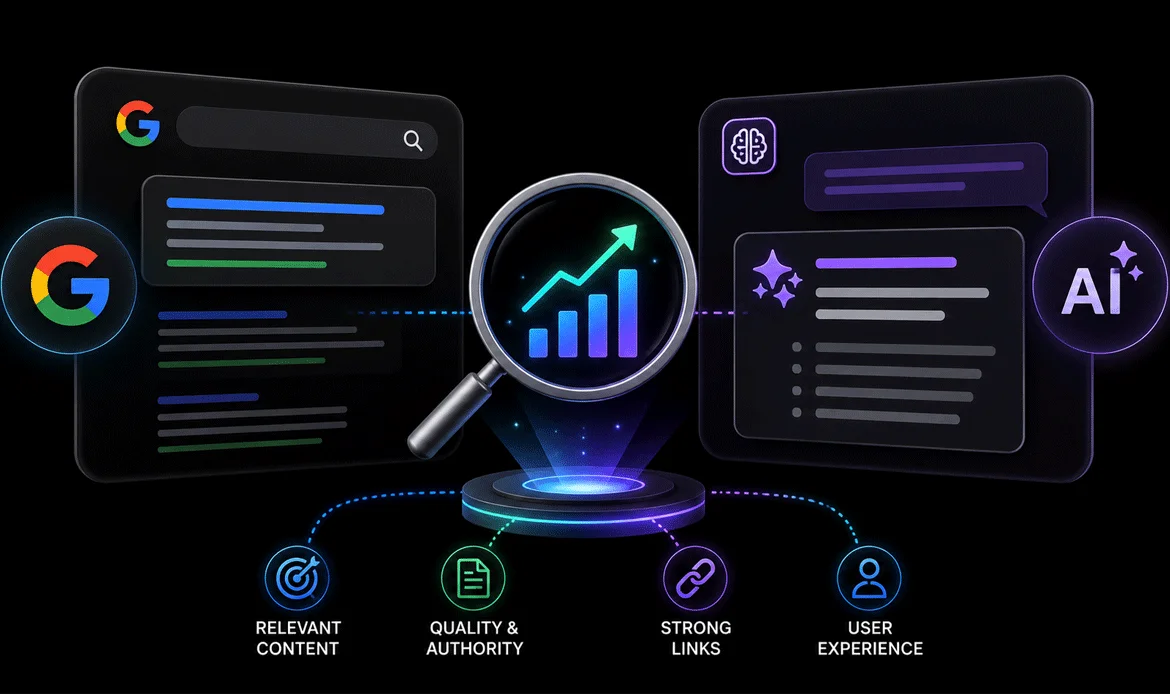
The most successful websites today optimize for both traditional search engines and AI-powered discovery. Rather than focusing on a single source of traffic, they create content that performs well in search results while also providing the depth, clarity, and expertise that AI systems value. By combining proven SEO practices with AI Search Engine Optimization, businesses website can improve their chances of reaching users across both conventional search platforms and emerging AI-driven experiences.
Some practical strategies include:
- Create in-depth content
- Improve page speed
- Use clear heading structures
- Answer user intent
- Update older articles
- Add FAQs
- Build internal links
- Publish original insights
These practices improve visibility regardless of how users search for information. By creating helpful, well-structured, and authoritative content, businesses can strengthen their Google Search Ranking while also increasing their chances of being recognized by AI-powered search experiences. A user-focused approach ensures that content remains valuable across both traditional search engines and emerging discovery platforms.
Rather than choosing between SEO and AI optimization, focus on creating content that genuinely helps people.
8. The Future of Search Belongs to Helpful Content
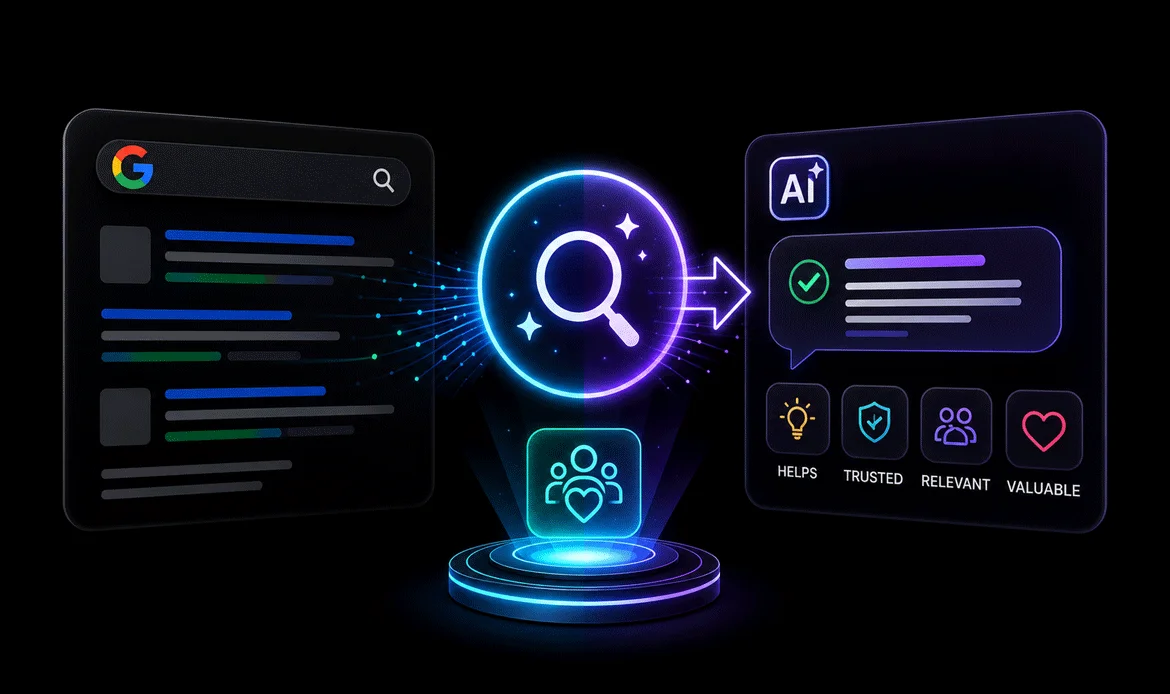
Search is evolving rapidly. Users are moving beyond traditional search results and increasingly relying on AI-powered tools to find answers. Instead of browsing multiple webpages, many users now expect immediate, accurate, and context-rich responses. As this shift continues, AI Search Engine Optimization is becoming an important strategy for businesses that want their content to remain visible, relevant, and trusted across both search engines and emerging AI-driven platforms.
This does not mean SEO is disappearing. It means content quality is becoming more important than ever.
Google still wants to show the best pages.
AI wants to provide the best answers.
The websites that succeed in the future will be those that satisfy both goals. Businesses that prioritize expertise, usefulness, and trust will be better positioned to attract traffic regardless of how search technology evolves.
Frequently Asked Questions
➤ Can a website rank on Google but not appear in AI answers?
Yes. AI systems may prefer content that provides deeper explanations and more complete answers, even if another page ranks higher.
➤ Does AI replace traditional SEO?
No. AI complements traditional SEO rather than replacing it. Both are important for online visibility.
➤ Why do some smaller websites appear in AI answers?
Because AI often prioritizes content quality, expertise, and usefulness rather than brand size alone.
➤ What type of content performs best in AI-powered search?
Content that is comprehensive, accurate, easy to understand, and genuinely helpful to users.
➤ How should businesses prepare for the future of search?
Focus on creating trustworthy content, answering user questions completely, and building authority within a specific niche.
Final Thoughts
The difference between Google and AI is simple but powerful. Google tries to find the best page, while AI tries to find the best answer. Traditional search engines focus on ranking and displaying relevant webpages, whereas AI systems analyze information to deliver direct, context-rich responses. This shift highlights the growing importance of AI Search Engine Optimization, which helps websites create content that is not only discoverable in search results but also valuable enough to be referenced and trusted by AI-powered platforms.
If your website focuses only on rankings, you may miss opportunities in the next generation of search. But if you focus on helping users, solving real problems, and building authority, your content will be positioned to succeed across both traditional search engines and AI-powered platforms.
The future belongs to websites that are not just visible but genuinely valuable.
Ready to Build a Website Optimized for the Future of Search?
Explore premium WordPress themes designed for speed, SEO, user experience, and modern content strategies that help improve Google Search Ranking while creating a stronger foundation for long-term online visibility and growth.